
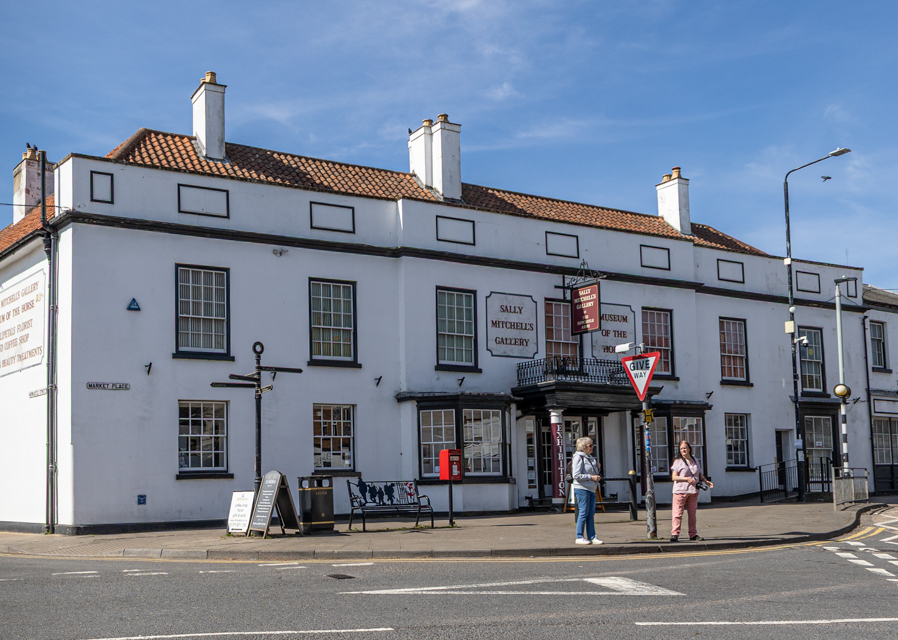
During April, members of Snappers Camera Club enjoyed a successful day trip to Tuxford. They received a warm welcome from both the Walks of Life Museum and the Museum of the Horse, with an excellent lunch provided by Chillipetals in the new conference room adjoining the latter. To allow space for tripods and ease of movement, the group divided into two smaller teams.
Photographing within museum settings presents unique challenges, but club members, as experienced photographers, rose to the challenge and then their pictures were shared at the May meeting held in Beckingham.
The evening began with three print presentations. Barry Inman displayed a varied collection including excellent bird photography and action shots of black-tailed godwits. Fellow bird photography enthusiast Des Lloyd followed with a striking series of images featuring a bittern as it came in to land – a rare and dramatic capture, in contrast to the more static views of the bird typically shown in nature documentaries.
Peter Yeo concluded this section with a moving set of monochrome images taken at Auschwitz. His photos captured both the stark atmosphere of the site and the powerful narrative behind its exhibits. This served as a poignant tribute to those who perished.
Members’ photographs from Tuxford demonstrated a range of techniques used to tackle the challenges of museum photography. Both museums provided opportunities to focus on intricate details, allowing members to highlight the craftsmanship involved in many of the artefacts, and naturally eliminate visual distractions.
Post-processing played a key role, with many members utilising a technique known as ‘cloning out’ to remove wires, mounts, and nearby exhibits, thereby producing cleaner images. Some opted to apply vignettes to soften surrounding elements, while others converted their images to monochrome to reduce colour distractions.
Kerry Muscott shared a particularly impressive result using a technique she had learnt via YouTube to reduce reflections from glass cases – a persistent problem in museum photography. Her examples, showing small items behind glass, demonstrated how effective this method could be.
To conclude the session, Dik Allison provided a brief overview of free photo-editing software, which offers much of the functionality associated with Photoshop but without subscription fees. The interface and tools are similar, making it a practical alternative. He will revisit the subject in greater detail during an upcoming presentation on a free alternative to Lightroom.
The club now looks ahead to its next meeting at Beckingham Village Hall on Friday 6th June, where members will present their responses to the current theme, ‘Textures’.
For more information, please visit www.snappers.org.uk.