
The Dosco story at the Walks of Life Museum has strong links to mining and prompted reflections on the role of women through the years. From the book Pit Lasses c.1800–1941 comes the voice of Agnes Keer, aged fifteen, a coal bearer: “I canna say I like the work well, for I am obliged to do it: it is horse work.”
A woman’s task was twofold – to move the rocks her man had loosened and to ensure that everything she carried to the surface was credited to his account. In pits that were narrow and difficult to work, the bearers who brought up the coal on their backs were almost entirely women. In June 1820, tragedy struck when six-year-old Elizabeth Pendry was killed in an explosion. It is important to remember the women who undertook such demanding and dangerous jobs.
Older residents of Tuxford will recall June Bown, who carried sacks of coal on her back while supporting her husband’s business. If anyone has a photograph of her, her daughter Sonya would love to see it. Another memorable local character was Mary Parks, the window cleaner – a hardworking woman who pushed her cart around Tuxford, swiftly running up her ladder to get the job done.
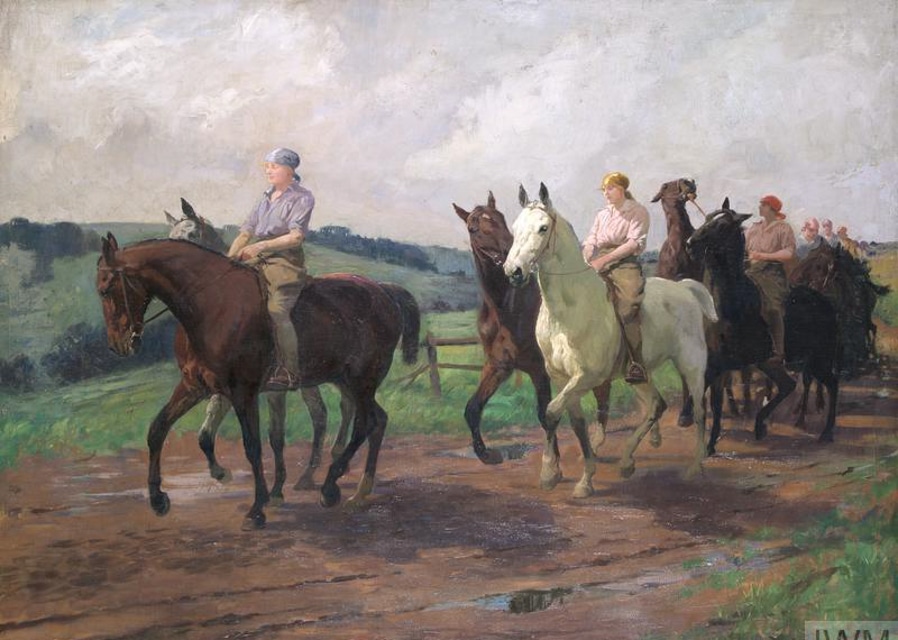
Before the First World War, most society ladies rode side-saddle. When war broke out, the demand for horses was immense, and animals were requisitioned from across the country. The government foresaw that war was likely and began compulsory purchases of privately owned horses. There was little anyone could do to prevent their much-loved horses from being taken to remote depots, where large barns were converted into stables. These facilities were run by experienced horsemen, including the artist Cecil Aldin.
With so many men away, women stepped in to care for the horses – work that was far from the refined lives many had been used to. Horses needed to be kept fit for war, often requiring riders to exercise three at a time – riding one while leading two others. Riding side-saddle made this impossible, so women began to ride astride. At first this was frowned upon, as some viewed it as indecent, but the change soon became accepted. While a few elderly ladies continued to ride side-saddle, most adapted, and today the practice has even become fashionable again among some riders who hunt or compete – and they do look very elegant.
For further information, contact curator@museumofthehorse.co.uk.