
January is often a time when we make promises to ourselves about things we want to achieve or improvements we’d like to make in our lives. My advice to readers as we welcome in 2026 would be to go easy on yourself and rather than setting yourself up to fail with a significant lifestyle change – just make 2026 the year you spend a little more time connecting with nature.
Whilst wildlife might not know it’s a New Year; seasonal shifts will usually mean that wildlife is active so there’s plenty so see and enjoy whether in terms of creatures busying themselves to find food and fend off the cold or those preparing for the crucial breeding season.
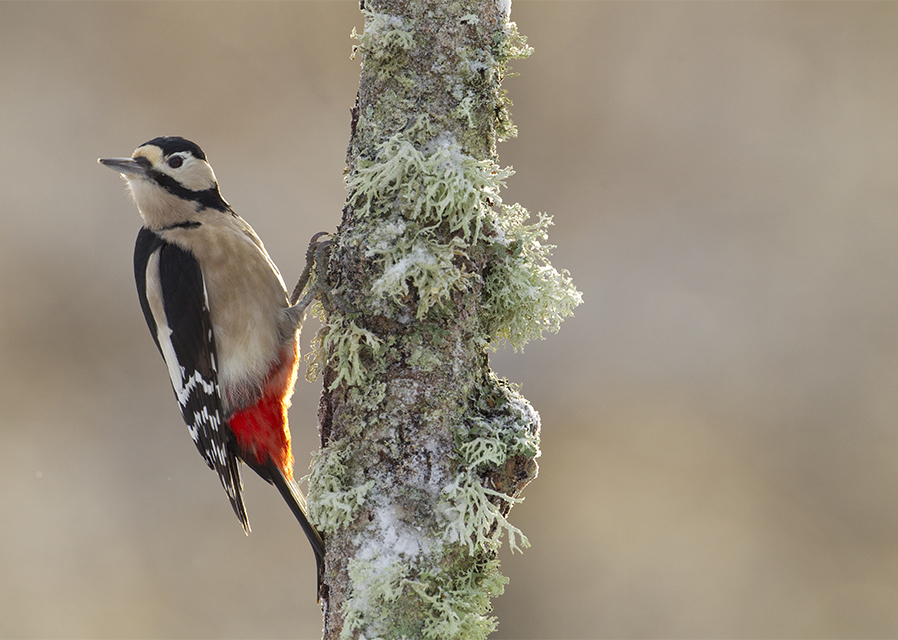
If visiting a local woodland, there’s plenty of interesting species to watch out for, from treecreepers scurrying around tree trunks in search of insects amongst the crevices or woodpeckers, both male and female drumming high on a tree to mark their territory and signal to prospective mates. Whilst not a native species, many people enjoy seeing grey squirrels and this is their peak breeding season, so they are sure to be active. You might even spot a treecreeper or two in amongst mixed flocks of tits, including bluetits and long-tailed tits, moving through woods in search of food. Whilst the trees will be dormant, they still add interest – so look out for colourful bark and buds and for fungi such as the birch polypore or birch bracket on dead and dying trunks.
If visiting a local wetland look out for duck such as scaup and smew on the open water and for grey heron or even a bittern stalking in the margins looking for prey in the shallows. If you’re visiting a site along or close to the Trent or one of its tributaries, your chances of seeing an otter in some parts of the county are now much greater than you might think – though you’ll likely need to be out around dawn or dusk to give yourself the best chance – but the challenge of finding food in winter makes it more likely that you might just catch a glimpse in daylight.
If walking in more open countryside, you may well spot flocks of thrushes such as redwings and fieldfares which come here from colder places such as Russia and Iceland in search of bumper berry crops. Their ‘chack, chack, chack or ‘tsak, tsak, tsak,’ call can give away the presence of fieldfares in mixed flocks of thrushes. Sheltered hedgerows might also provide a chance of spotting early snowdrops.
If you choose to stay closer to home, traditional favourites such as robins will raise a smile and keep an eye out for early bulbs poking through the soil, promising colour in the weeks ahead. January is also a good time of year to add structure to your garden by planting a native tree such as a crab apple.
Whatever way you decide to connect with nature, remember that wildlife watching doesn’t have to be about long treks, checklists and finding rarities. Take the time to appreciate whatever species are around and don’t overlook common species. A closer look sometimes reveals that they are more interesting than you might think – either in terms of their colours or captivating and amusing behaviour.
Details of all Nottinghamshire Wildlife Trust’s nature reserves, events as well as information on a wide range of UK wildlife can be found at www.nottinghamshirewildlife.org.
Image: Peter Cairns