
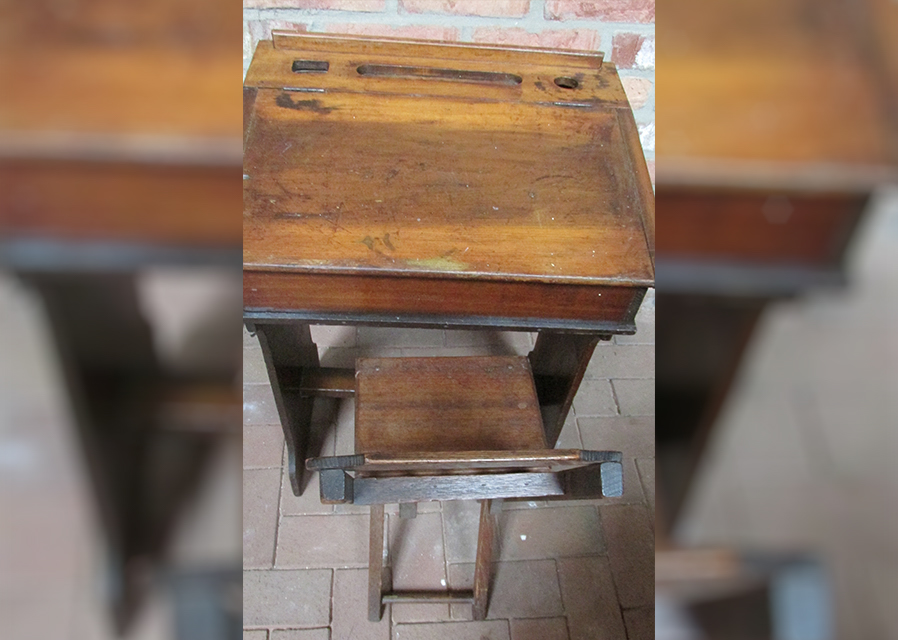
The return to school has prompted reflections on the value of education and how it has developed over time. Dorothy Harrison, founder of the Walks of Life Museum, recognised what a privilege education is and the advantages it brings. Her mother was a teacher at East Markham School, and Dorothy herself taught in Kenya and Papua New Guinea. Education was not available to all until the 1870 Education Act, which introduced free, compulsory, non-religious schooling. Prior to this, many schools had been started by private individuals and managed by trustees with charitable aims. The school leaving age was not raised to 15 until 1944.
Tuxford has a strong history as a centre of education, with both the Read Building (1669) and the Chantry taking fee-paying pupils and offering free places. Today, the CHINK charity shop in Tuxford continues that tradition by funding a school in Kenya, which is represented in a dedicated area of the Walks of Life Museum. Recently, friends of the museum Betty and John donated a child’s school desk, helping to create a display of ‘school days’ when ink, pencils and exercise books were the tools of learning. Today, of course, computers and the internet have transformed access to knowledge and opportunities.
The Museum of the Horse will hold its online auction on Sunday 19th October via the-saleroom.com. Alongside many equestrian items, including pieces from the collection of the late Jim Meads, there will be a large handmade vintage French faience plate. With beautiful hand glazes, such plates sell new for over £200, offering the chance to secure a bargain. Other lots include cricket, golf and aviation prints, paintings, military items, an artist’s easel, furniture and even fitness equipment. Many items are being sold in support of the museum. For details, call 01777 838234. The auction catalogue can be viewed online at the-saleroom.com under ‘Museum of the Horse’. Lots will be on display on Friday from 10.00am to 4.00pm and on Saturday from 10.00am to 1.00pm. Visitors are welcome at the museum during these times.
On Saturday 18th October the museum will host the Owling Mad event, featuring stalls from 10.00am to 3.00pm. From 10.30am to 12.30pm there will be the chance to learn about owls and even hold one, with photos available for £2.00. Anyone interested in having a stall should contact Diane on 01777 872776 or dianehunt08@btinternet.com.
Museums play an important role in preserving traditions and skills from the past, helping us to use them to enrich life today. As the old saying goes, ‘Don’t throw the baby out with the bath water.’ In the 16th century, families often had only one bath a year in May, using a barrel after the long winter. The father would bathe first, with the baby last, when the water was very dirty – a vivid illustration of the expression, which warns against hasty decisions.