
As we turn over the page on our calendars to February, the days should be noticeably longer and much of our cherishes natural world seems to be emerging from its winter slumber. There is a wealth of wildlife to savour, so I’ll highlight some of my personal favourites. After the seemingly endless drab days, one of the wonders of late winter is that early flowers such as snowdrops, primroses and crocuses seem to appear almost as if by magic, bringing a restorative burst of colour.
Whilst snowdrops and crocuses are not native to the UK, they have long been naturalised and are a welcome sight and a crucial source of early nectar for insects. Crocuses were once so common in and around Nottingham and along the Trent that the spring (crocus vernus) and autumn (crocus nudiflorous) are collectively known as the ‘Nottingham Crocus’. The spring crocus is native to the Balkan area of the former Yugoslavia and is believed to have been brought here by monks as a medicinal plant before 1500. Amongst the insects seeking early nectar could be butterflies including small tortoiseshell, brimstone and peacock – some of our most recognisable species.
Another of my favourite sights is hazel catkins. When I see the male flowers, sometimes known as lambs tails, dangling from the branches of my hedgerow trees I know that nature is bursting back to life. The number of catkins on my hedges should mean I get to enjoy a healthy crop of hazelnuts each autumn, but I’m usually beaten to the bounty by voracious squirrels.
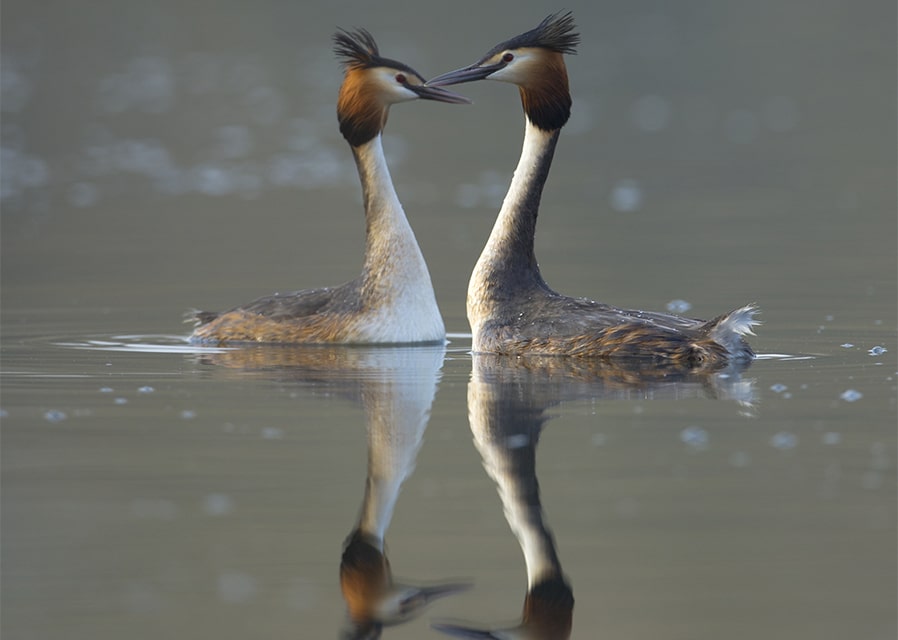
February is also renowned as key time for birds to pair and mate, and the balletic mating dance of great crested grebes is something you should definitely look out for when visiting wetland nature reserves. If you are visiting wetlands, look out for early frogspawn, especially if temperatures have been mild. February usually marks the start of the spawning season, though early starters may well get caught out by frosts later on as spawn nearest the surface can die if the pond or lake freezes over. But, with females able to lay as many as 3,000 eggs, there’s every chance that some will survive to grow into the next generation.
Whilst not a species I have much experience of, one definitely worth looking out for this year is the waxwing. More usually found in Scandinavia, waxwings migrate to the UK due to extreme weather and food shortages. When we get increased numbers it is known as a ‘Waxwing Winter’ – and as I write, this is what 2026 is predicted to be. Good size flocks have been seen in Scotland following a poor berry crop in Scandinavia and birds have been seen as far south as Essex, so do keep an eye out. It is worth checking out Nottinghamshire Birdwatchers sightings page for recent locations – and you might be surprised where they get reported. As they search for and strip remaining crops of berries, they’ll happily visit parks, suburban streets and even supermarket car parks if there is food on offer.
For further details about wildlife to see in winter, our nature reserves and events, visit www.nottinghamshirewildlife.org.
For recent bird sightings visit www.nottsbirders.net/latest_sightings.html.
Image: Andrew Parkinson